Beyond the Wardrobe
At Peter Langner’s Detroit presentation, the gowns were built from plastic, scraps and leftovers. Sitting there, I stopped seeing the materials and started seeing the making.
By Tamela Clarke
The presentation was in Detroit, at the Harmonie Club, an Italian fashion celebration hosted by the Consulate of Italy in Detroit with Roma Sposa during the Milan Fashion Week season. I went to look at dresses. What I ended up studying was what the dresses were made of.
The gowns that came out were full evening dressing: a dress covered in floral appliqué, a sequined peplum over tulle, and a finale that closed the room down in blue light. At one point the designer himself was on stage adjusting a dress, which tells you something about how this house works. Nothing was presented as almost finished. Every piece arrived complete.
And then you looked closer, and the materials were not what evening dressing usually starts from. Plastic. Leftover fabric. Scraps from the workroom floor. The familiar language of a gown, built out of things most houses throw away.
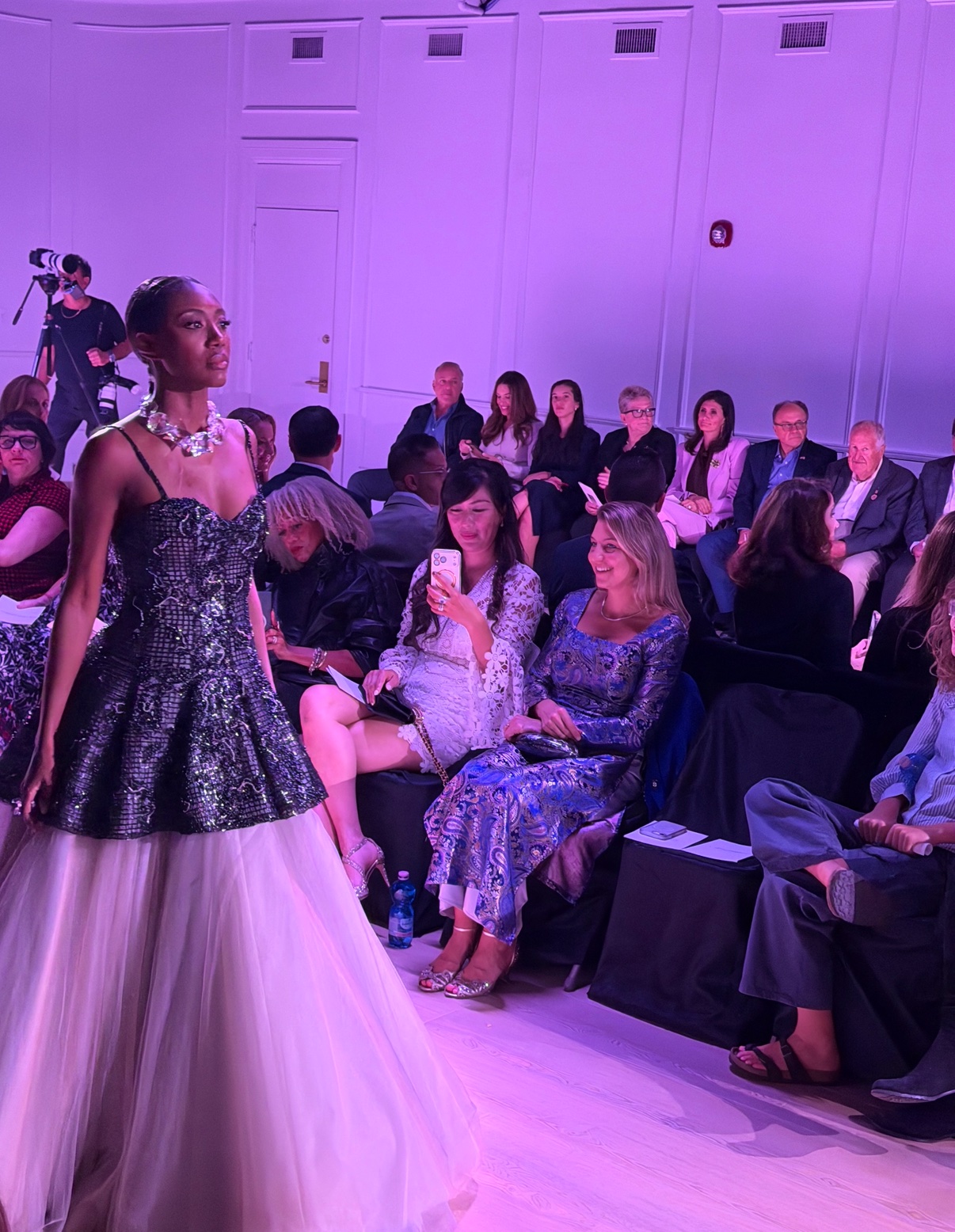
What I kept looking at
An unusual material is only interesting for a minute. What holds your attention is whether it belongs. On these dresses it belonged, because the surface, the proportion and the shape were all saying the same thing. The detail rewarded a closer look, and the silhouette had already done its work from across the room.
That is the part I brought home with me. A material is not ordinary or luxurious on its own. The making decides. Put enough skill and enough intention behind a leftover piece of fabric and it stops reading as leftover. It reads as the dress.
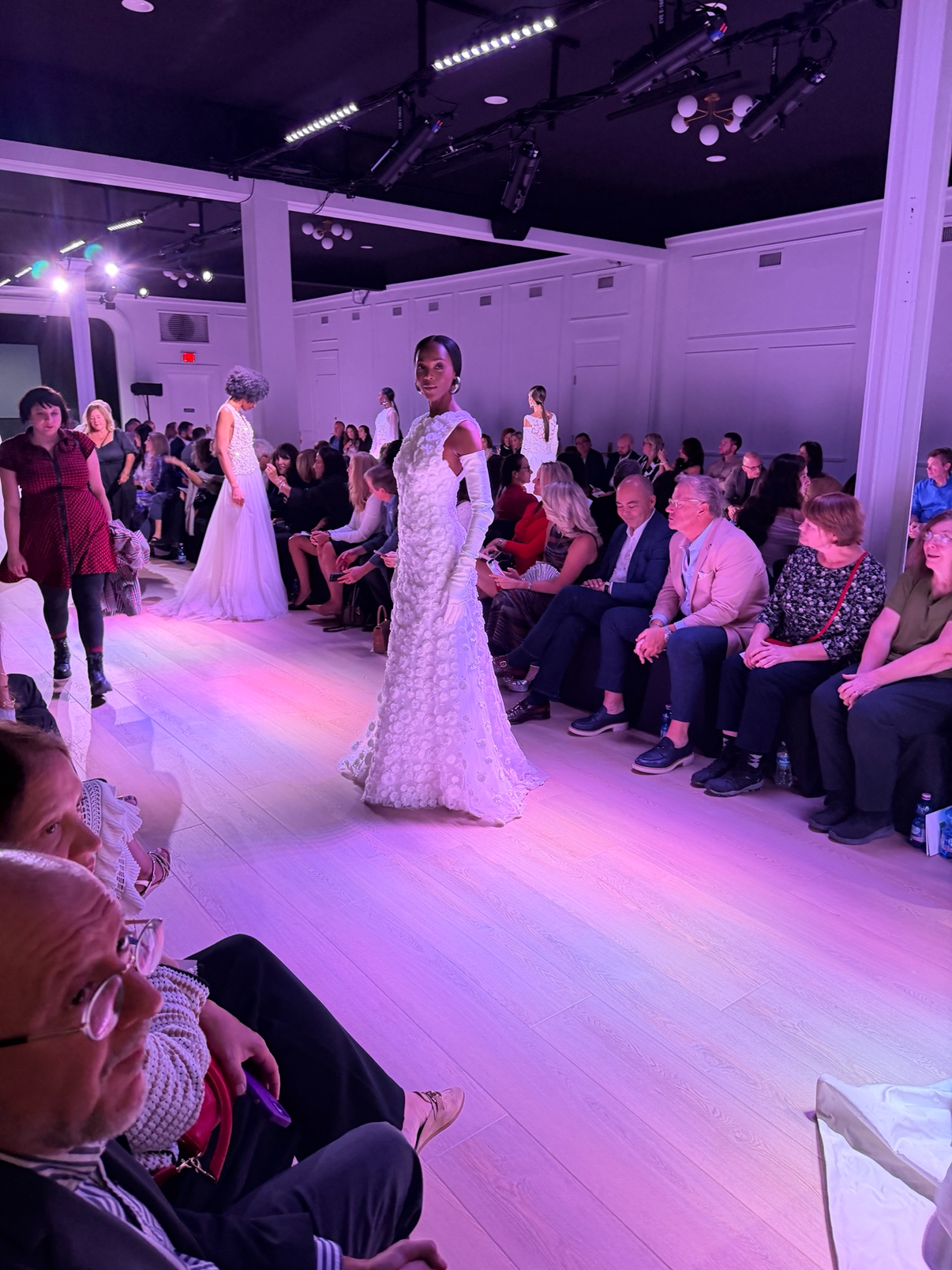
What the house says, in its own record
The house has a name for this work: the Responsibility of Beauty. In Peter Langner’s own pages, the sequins on one of its gowns are described as hand-cut from surplus fabrics of the house’s finest materials, each one cut by hand in the atelier. Coverage of the house’s collections describes geometric patterns embossed in recycled plastic, set against the architectural shapes the house is known for, and its gowns are handmade in its Milan atelier, where workroom scraps are recycled back into designs and accents.
That is the published record, and it is linked here so you can read it yourself. What I can tell you firsthand is narrower and, to me, worth more: I sat in the room, and the work held up at close range.
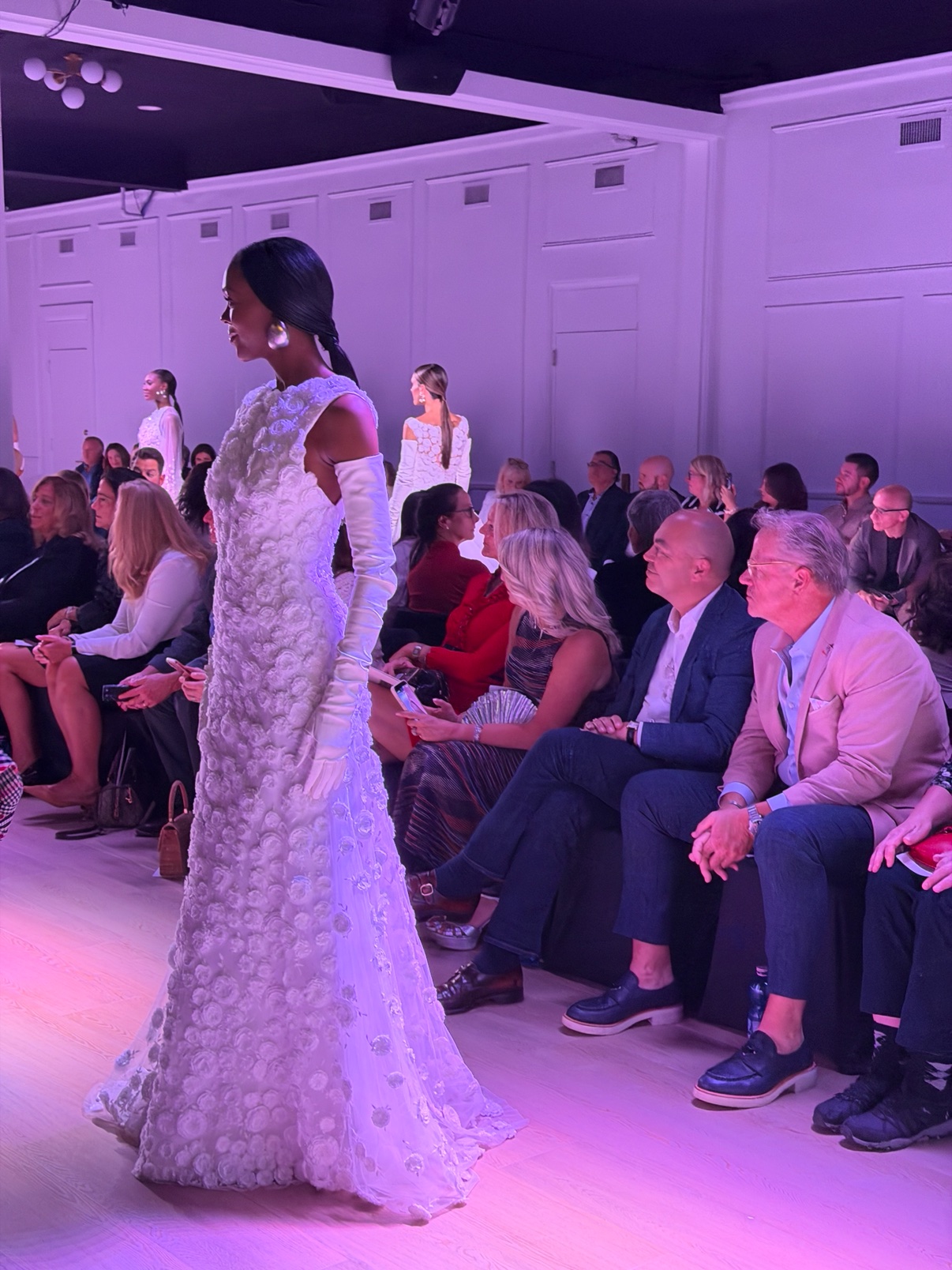
A different measure of value
An outfit made with care and worn often matters more than one made quickly and used once. I bought a silk shirt many years ago, paid more for it than I expected to, and I still wear it. There is a lesson in that shirt: the right garment keeps returning to the wardrobe, and over time the cost explains itself.
Langner’s gowns sit at the far end of that same idea. They are made for a single wearer, in small numbers, by people whose whole job is the making. That is how a house can afford to spend hours turning scraps into a surface. The scale is different from my closet. The principle is not. Value is not what a piece is made of, or even what it cost. Value is whether it keeps earning its place.
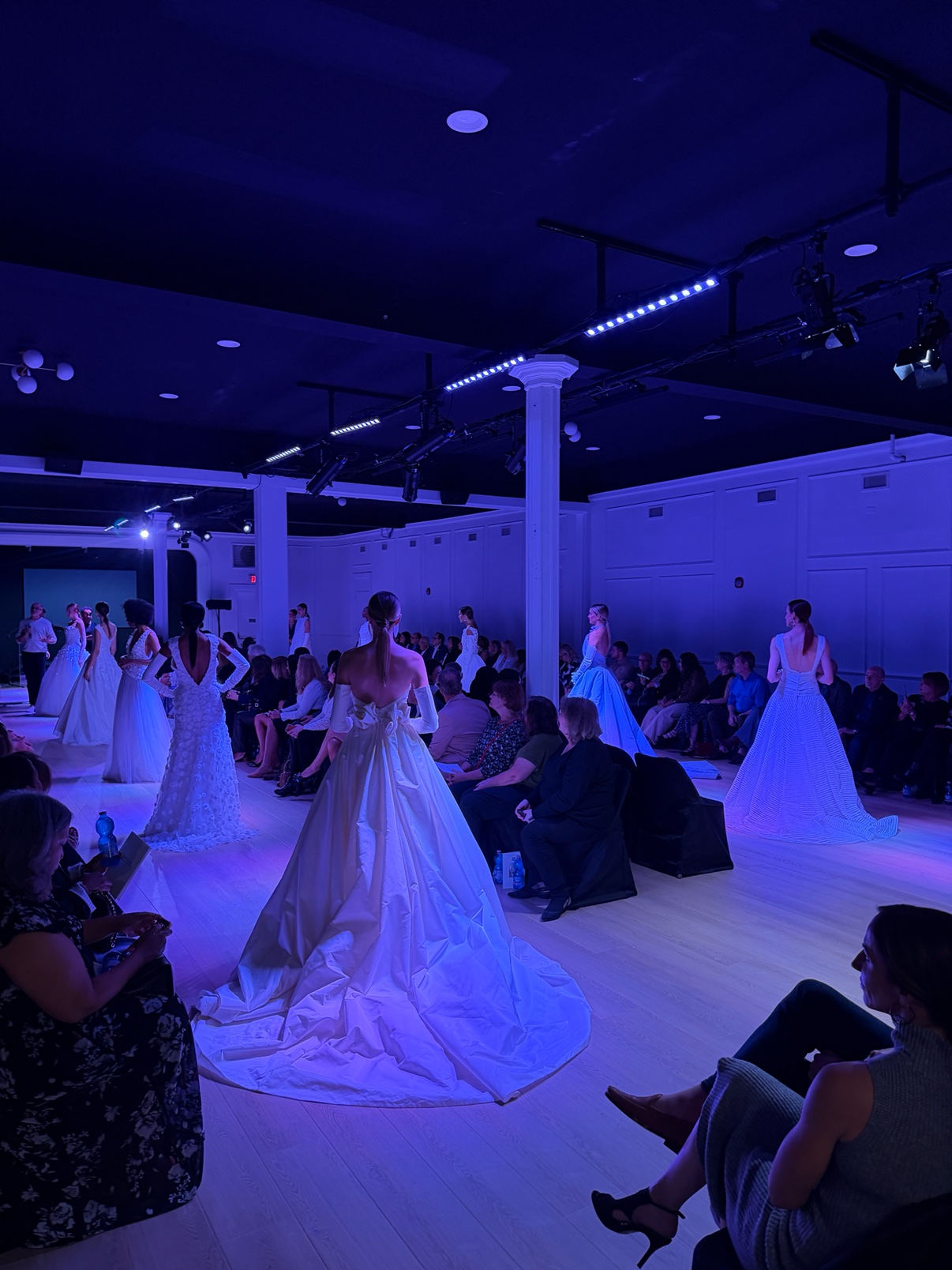
Beyond the expected
What stayed with me was not a single look. It was the sense that something had been achieved by looking past the familiar materials, and past the familiar idea of luxury. These dresses did not depend on shock. They depended on attention: to surface, to shape, and to the quiet work that lets a garment hold together.
That is not an easy thing to do. It is a useful thing to remember the next time a collection arrives, and the next time any of us stands in front of a closet deciding what deserves to stay.
Read The Point of View, Tamela Clarke’s newsletter.
Style Memberships: The Style Desk and The Style Suite, ongoing styling guidance, billed monthly.